Whether it is matric exams, FSc, an entry test or a university degree, Pakistani students spend long hours studying at home. Often the "study area" is a corner of the bed, the dining table or the floor of a shared room. A dedicated desk, even a small one, makes a real difference to focus. And a desk that looks good is one students actually want to sit at.
Find the right spot
Choose a place that is as quiet as possible, away from the television and the main family traffic. Natural light from a window is ideal, but position the desk so that the window is beside you, not behind the screen or directly in front, to avoid glare. If space is tight, a wall-mounted shelf or a foldable table can work in a bedroom.
Get the posture right
Long hours of bad posture lead to back and neck pain. A few simple checks help:

- Feet flat on the floor, knees at about a right angle
- Elbows level with the desk when writing or typing
- Top of a laptop or monitor at eye level; use a stack of books if needed
- A chair with back support, or a cushion behind the lower back
- A short break every 30 to 45 minutes to stand and stretch
Light for long evenings
Good lighting reduces eye strain. Use a desk lamp aimed at the book, from the opposite side of your writing hand so your hand does not cast a shadow. A rechargeable lamp keeps studying going during load-shedding, which is especially important during exam season.
Keep only what you need
A cluttered desk makes it harder to start. Keep pens in one holder, current books in a small stand and everything else on a shelf or in a drawer. A simple tray for papers and a wall board for timetables and exam dates keep everything visible without covering the desk.
Time techniques that work
Many students use the Pomodoro method: 25 minutes of focused study followed by a five-minute break. A sand timer or hourglass on the desk is a nice alternative to the phone, which often turns a quick check of the time into twenty minutes of scrolling. Putting the phone in another room during study blocks is one of the most effective focus habits.

A little decor goes a long way
A desk does not have to be boring. A few personal items make it feel like your own space:
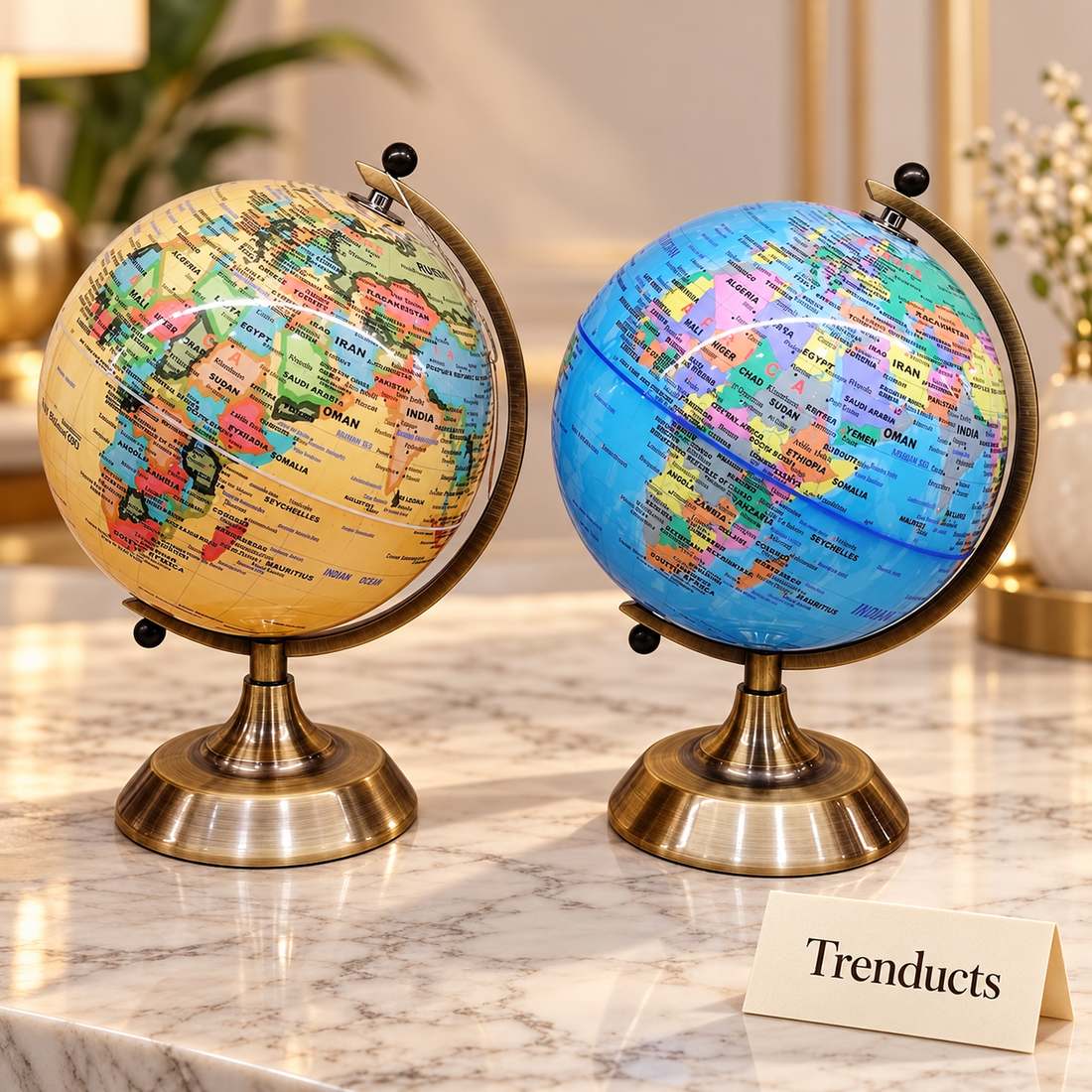
- A desk globe, which is both decorative and useful for geography and current affairs
- A small plant, real or artificial
- A photo or a quote that reminds you why you are working hard
- A neat mug or bottle so water is always within reach
Keep decor to a few pieces so the surface stays free for books.
Organising for exams
Before exams, divide the syllabus into weekly targets and stick the plan on the wall. Keep past papers in labelled folders. Clear the desk at the end of every day, so the next morning starts fresh.
Healthy habits
Drink water, eat proper meals and sleep enough. Studying late into the night before an exam usually hurts more than it helps.
Quick questions
- What is the best desk height? Most adult desks are around 72 to 76 cm high. Younger children need a lower table or a higher chair with a footrest.
- How do I stop phone distractions? Keep the phone in another room or in a drawer during study blocks, and use a physical timer instead.
Finishing touches
If you want to add a personal piece or two, the desk globes and decorative showpieces at Trenducts include classic world globes with brass and chrome stands, plus hourglass timers that suit a study routine. A thoughtful desk makes hard work feel a little easier.
A good study desk is not about expensive furniture. It is about light, comfort, order and a space that tells you it is time to focus.